Anna Thommesen - Weavings
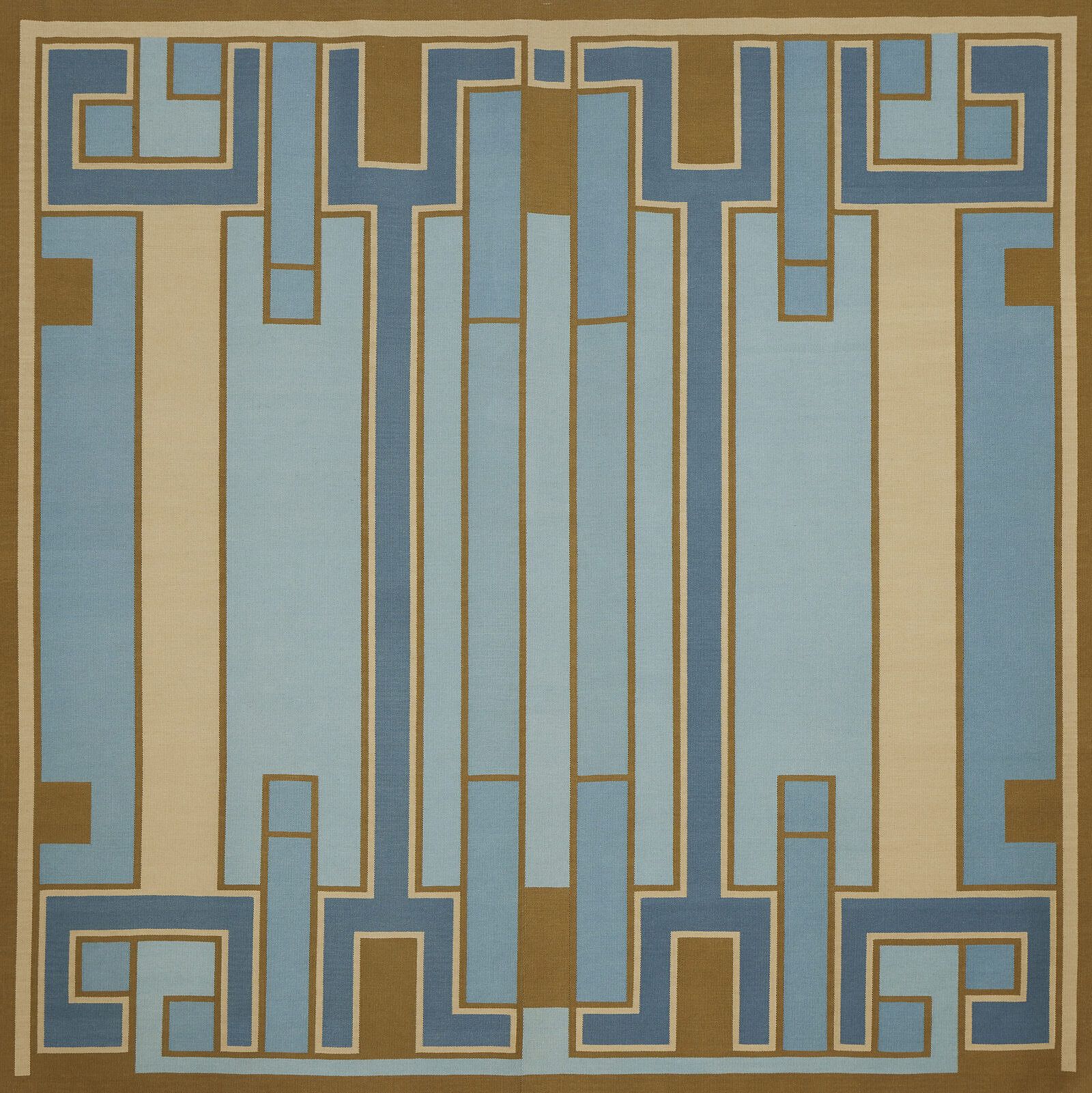
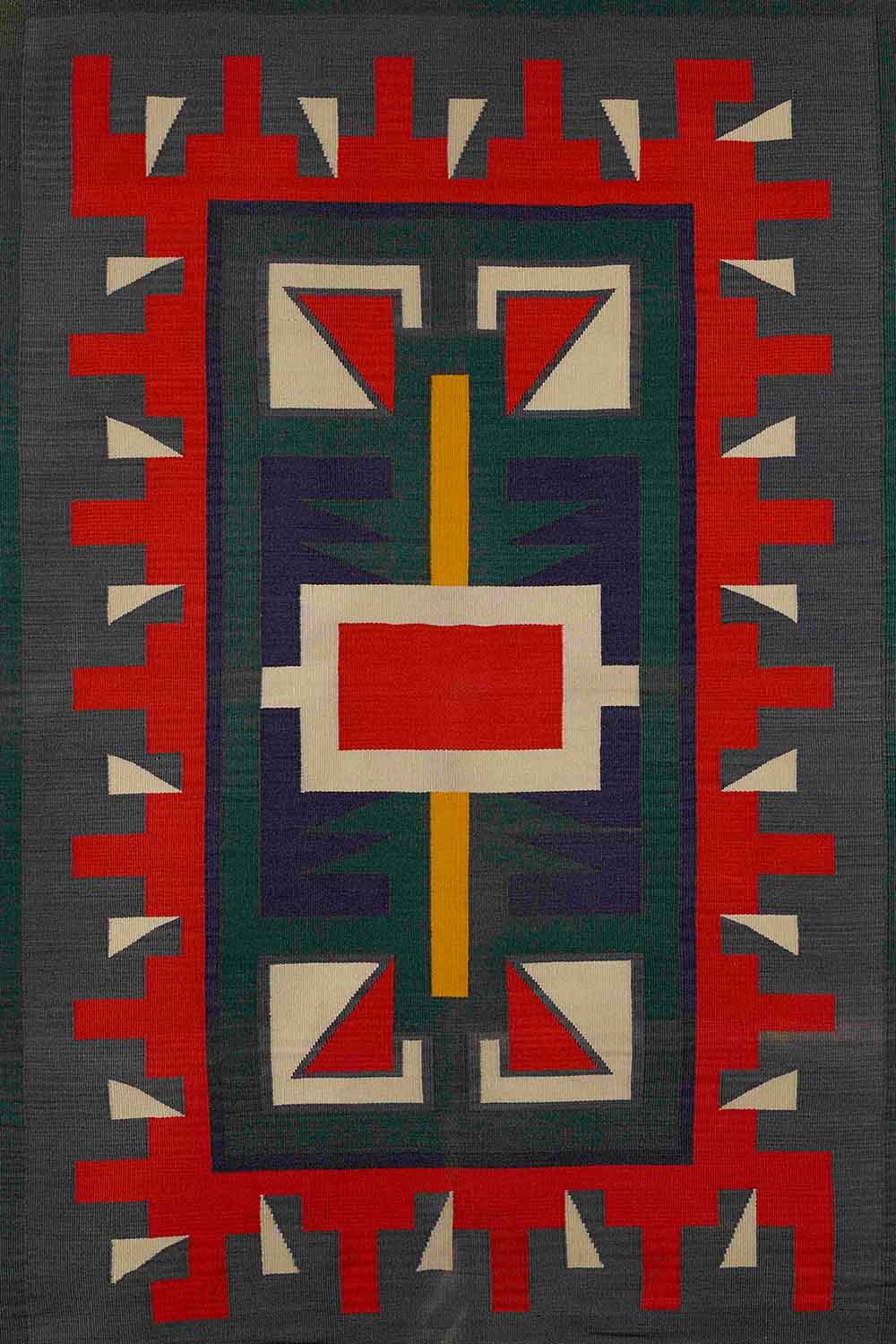
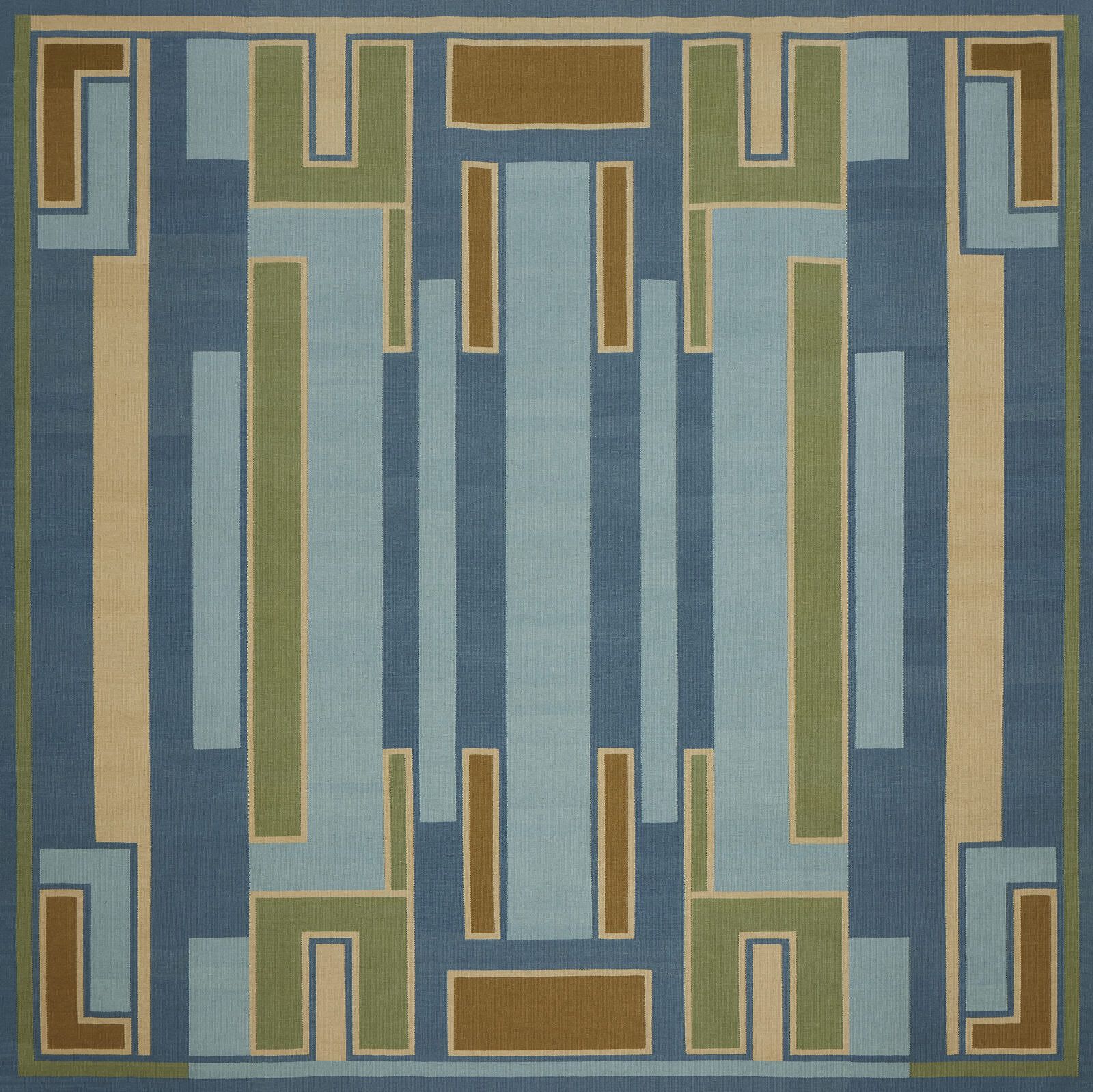
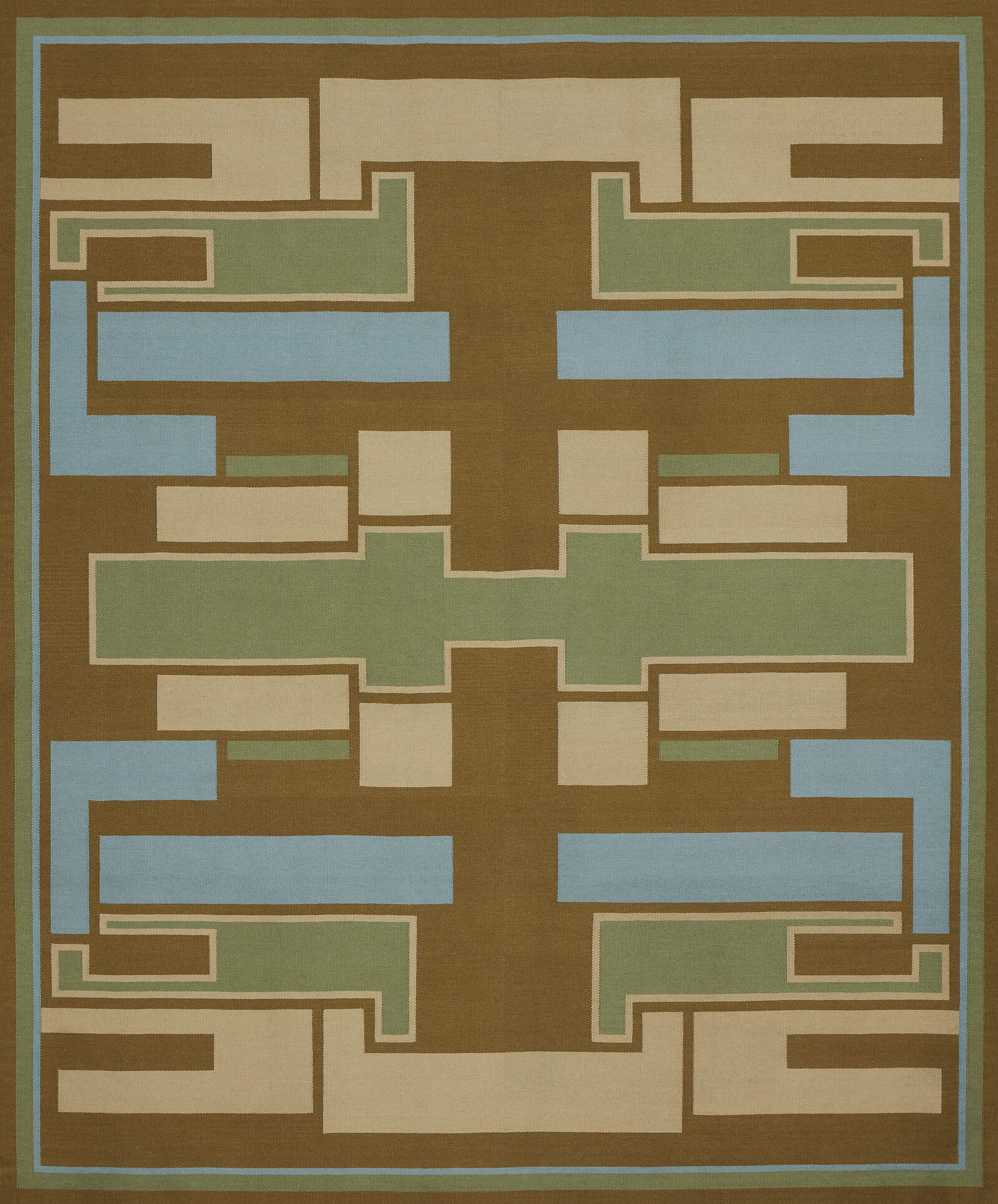
Anna Thommesen created colours and patterns inspired by nature. Over five decades she wove a series of exceptional abstract tapestries. This Autumn's major special exhibition devoted to Anna Thommesen and her life’s work is the first to unfold her practice in full, to explore it from new perspectives, and to position her and her significant role within art history.
The exhibition sheds new light on Anna Thommesen’s lifelong work and presents more than 40 handwoven tapestries alongside the prestigious decorative commissions she created for private homes, art collections and important public spaces such as Roskilde Cathedral and the Landsting Chamber at Christiansborg. Her tapestries were rooted in age-old handweaving techniques and in yarns she dyed herself – for many years using plants she collected in nature. The exhibition also features meticulous pattern drawings, painterly watercolour sketches and original colour samples that offer a unique insight into her artistic process.
Anna Thommesen was self-taught. She began as a painter before fully embracing weaving as her medium in the 1940s – a choice that likely shaped her position somewhere between craft and fine art, making her difficult to categorise. The exhibition offers an insight into her life as a female artist and the independent position she insisted on at a time when strong modernist movements dominated both art and design. She pursued her own personal expression, outside programmes or dogmas, with nature as a central point of reference.
She helped bring the medium of weaving firmly into modern art, and today her works resonate strongly with contemporary art’s renewed interest in textile media. Among the wider public, too, there is a growing fascination with textiles and handcraft. The tactile, the slow and the creative are increasingly embraced as ways to find calm and focus in a busy everyday life.
Anna Thommesen – Weavings has been developed in collaboration with the National Gallery of Denmark, where it was shown Febraury 7 - August 16, 2026.
About Anna Thommesen
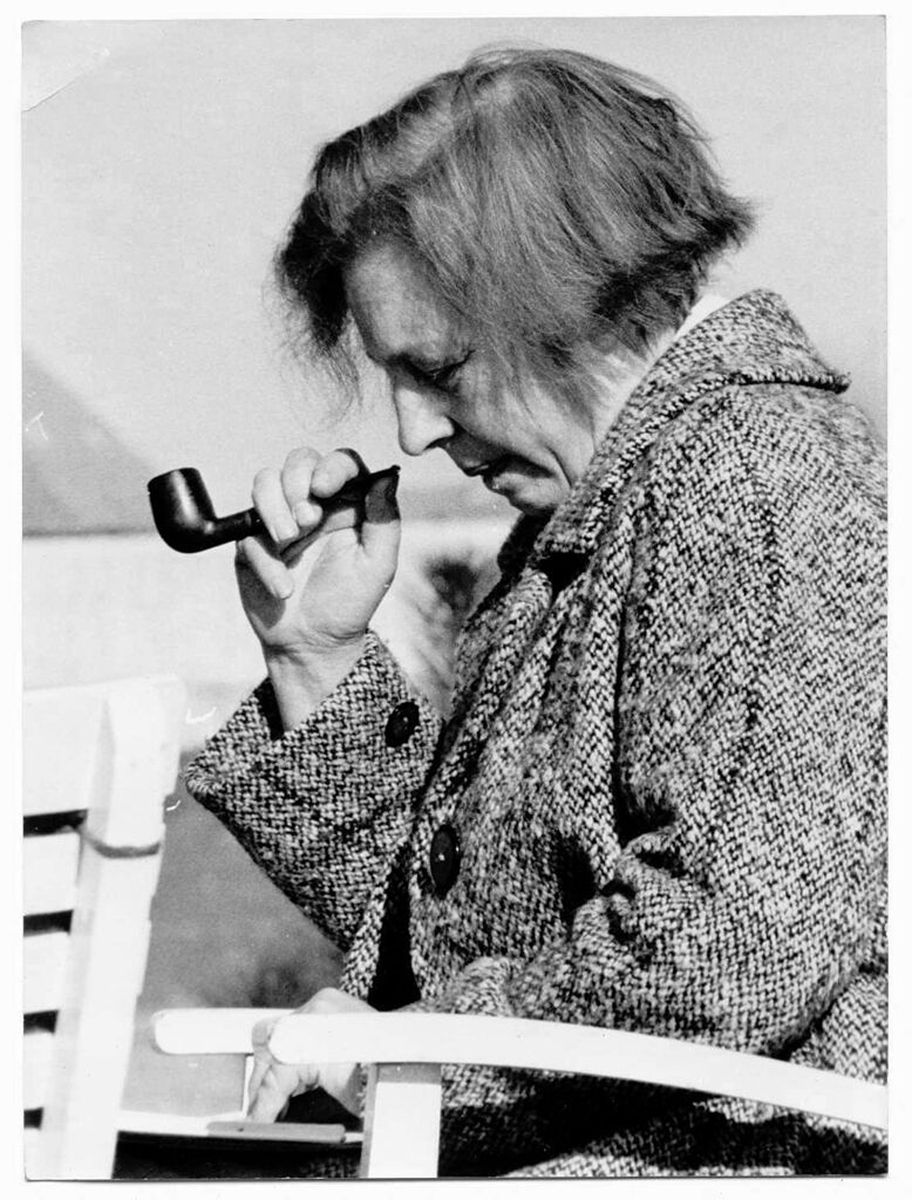
Anna Thommesen (1908-2004) grew up in a middle-class family in Copenhagen. At the age of 20 she married and, during the 1930s, lived a conventional bourgeois life in Allerød, where she worked with landscape painting.
Not until she met her second husband, the sculptor Erik Thommesen – whom she married in 1940 – did she fully commit to life as an artist and to weaving as her chosen medium. They lived in poverty in Copenhagen before moving to Færgelunden by Roskilde Fjord in 1941 and later to Bornholm. There, the artist couple, who were politically active and part of the resistance movement against the Nazi occupation of Denmark, could seek refuge from the occupying authorities. They went on to spend most of their lives in Blistrup in North Zealand, in a house designed by their friend, the prominent architect Finn Juhl, surrounded by nature and a large, flourishing garden. It was here that Thommesen wove the majority of her works.
She made her debut at Kunstnernes Efterårsudstilling (The Artists’ Autumn Exhibition) in 1943 and took part in group exhibitions including Linien II (1947), as well as joint exhibitions with her husband at Galleri Tokanten (1949 and 1950), where she sold her first piece to the Danish Museum of Decorative Arts (now Designmuseum Danmark). The Museum of Decorative Arts later acquired another of her weavings, and SMK acquired a work in 1955. Several important private collectors also took an interest in her art, including her friend, Finn Juhl; founder of the Louisiana museum Knud W. Jensen; and Denmark’s first Minister for Culture, Julius Bomholt. She was a member of the artists’ group Martsudstillingen from 1952 to 1982 and participated in most of the group’s exhibitions. For five years (1965 to 1970) she taught weaving at the Jutland Art Academy (Det Jyske Kunstakademi), where she fostered a uniquely strong textile-art scene in Denmark.
In 1963 Anna Thommesen won her first major public commission, awarded through the Danish Arts Foundation (Statens Kunstfond): a tapestry for Vesthimmerlands Gymnasium in Aars. Other significant commissions followed: a tapestry for Nørrelandsskolen in Holstebro (1968), supported by the New Carlsberg Foundation (Ny Carlsbergfondet); three large tapestries for the former Chamber of the Landsting at Christiansborg Palace (completed in 1972), initiated by Julius Bomholt; and, for Roskilde Cathedral, an antependium, altar carpet and kneeler commissioned by the Danish Arts Foundation and inaugurated in 1977.
Thommesen’s final work is dated 1996.
Listen to the exhibition
The exhibition is accompanied by audio tracks featuring people who knew Anna Thommesen or have a particular connection to her work. You can hear from conservator Maj Ringgaard, visual artist Mette Winckelmann, curator Dorthe Aagesen, and Anna Thommesen’s students, the weavers Merete Laurent, Bente Astrup Moe and Berit Øien.
The audio tracks can be heard at headset stations in the exhibition, or you can scan a QR code and listen on your own phone whenever it suits you. You can also listen here!
Audio production: MAKROFON – Anne Neimann Clement
Listen to conservator Maj Ringgaard talk about weaving techniques and plant dyeing.
Listen to visual artist Mette Winckelmann speak about freedom and structure.
Listen to curator Dorthe Aagesen talk about commissions for public spaces.
Listen to Anna Thommesen’s students, the weavers Merete Laurent, Bente Astrup Moe and Berit Øien.
Book
In conjunction with the exhibition, the book Anna Thommesen – Weavings has been published, featuring contributions from Dorthe Aagesen and Anders Gaardboe Jensen (eds.), Lynne Cooke, Mark Mussari, Philip Pihl, Ane Preisler Skovgaard, and Karen Vad.
Through a series of essays, the book offers a nuanced insight into Thommesen’s artistic practice and discusses her place in art history, viewed in the context of the significance of the textile medium in 20th-century visual art. It is richly illustrated with photographs of both pictorial weavings and public commissions, as well as biographical material, pattern drawings, watercolor sketches, and color samples.
Published in collaboration with Strandberg Publishing, this book is available in both Danish and English. You can purchase it for DKK 299 at the museum shop or online via our webshop.
What the art critics say
“Rarely have tapestries been exhibited so invitingly. It is divinely beautiful”
♥♥♥♥♥
Politiken
“A sensation rushes through me as I step into one of the exhibition rooms with Anna Thommesen’s tapestries”
★★★★★
Kristeligt Dagblad
“It’s outstanding, beautiful and sensual…”
★★★★
Berlingske
”This beautiful and radical exhibition of Anna Thommesen’s woven works places her where she belongs: firmly within Danish art history.”
Information
“This is an exhibition you don’t want to leave…”
★★★★★★
Kulturinformation
The exhibition is supported by